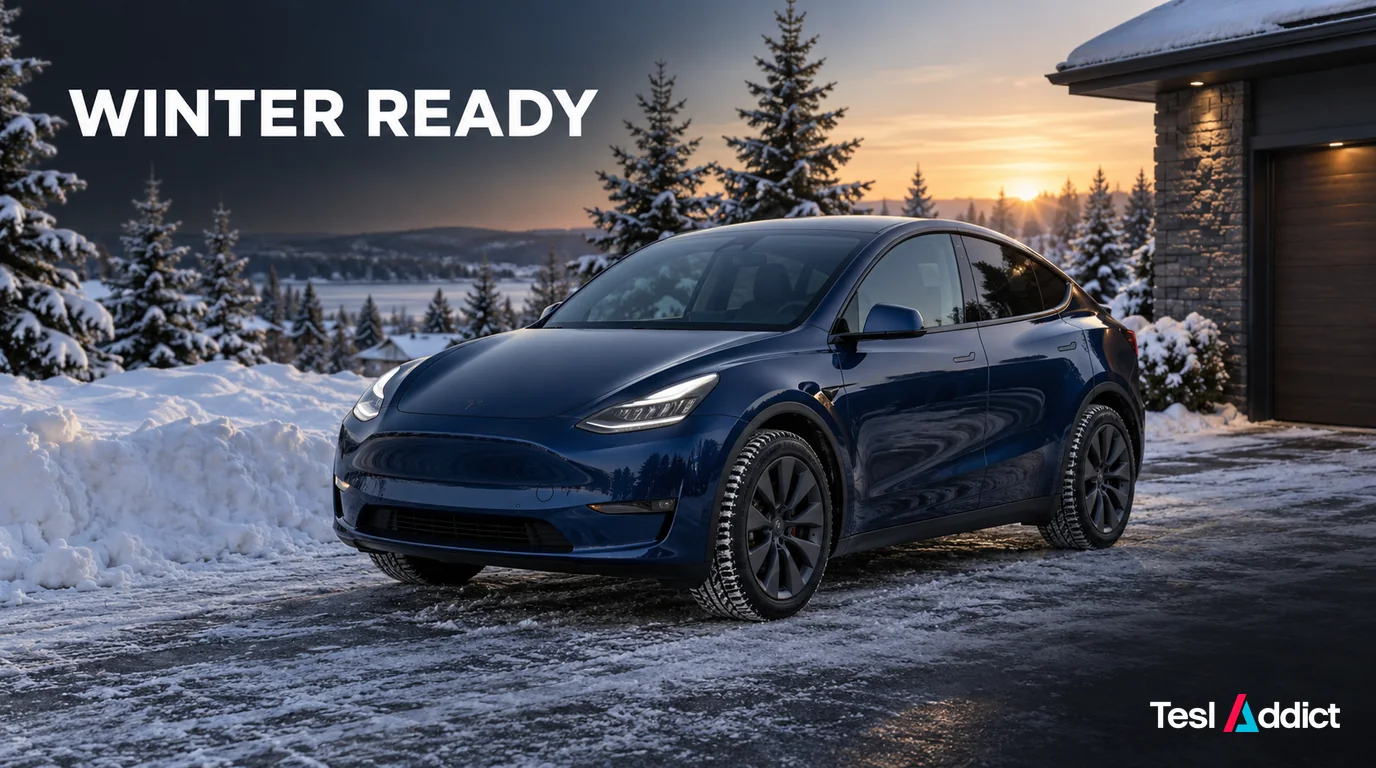
A Canadian winter setup for the Model Y should make everyday driving easier: suitable tires, a clear windshield, a protected cabin and a charging plan with room for cold weather. Start with those needs before buying accessories.
Choose winter tires for your exact vehicle
Check the approved wheel and tire specification for your model year and configuration. Have a qualified tire shop confirm fit, load rating and sensor compatibility. Do not substitute a narrower size solely because an accessory guide recommends it.
Winter equipment does not remove the need to slow down for conditions. No fixed stopping-distance improvement applies to every tire, road surface or temperature.
Keep slush and road spray manageable
Well-fitting floor liners and a cargo mat can make wet-boot cleanup easier. The driver’s mat must sit securely clear of the pedals; never stack mats. Mud flaps or splash guards may help protect exposed paint from road debris, but confirm fit for the exact Model Y generation.
Compare Model Y cabin mats for the supported legacy model years and Juniper Standard mud flaps for that specific bumper. These fit different Model Y versions; choose only the item that matches your car.
Compare compatible items in TeslAddict’s Canada Gear selection. Buy for the area you need to protect rather than assuming a larger accessory bundle is better value.
Prepare the windshield and wipers
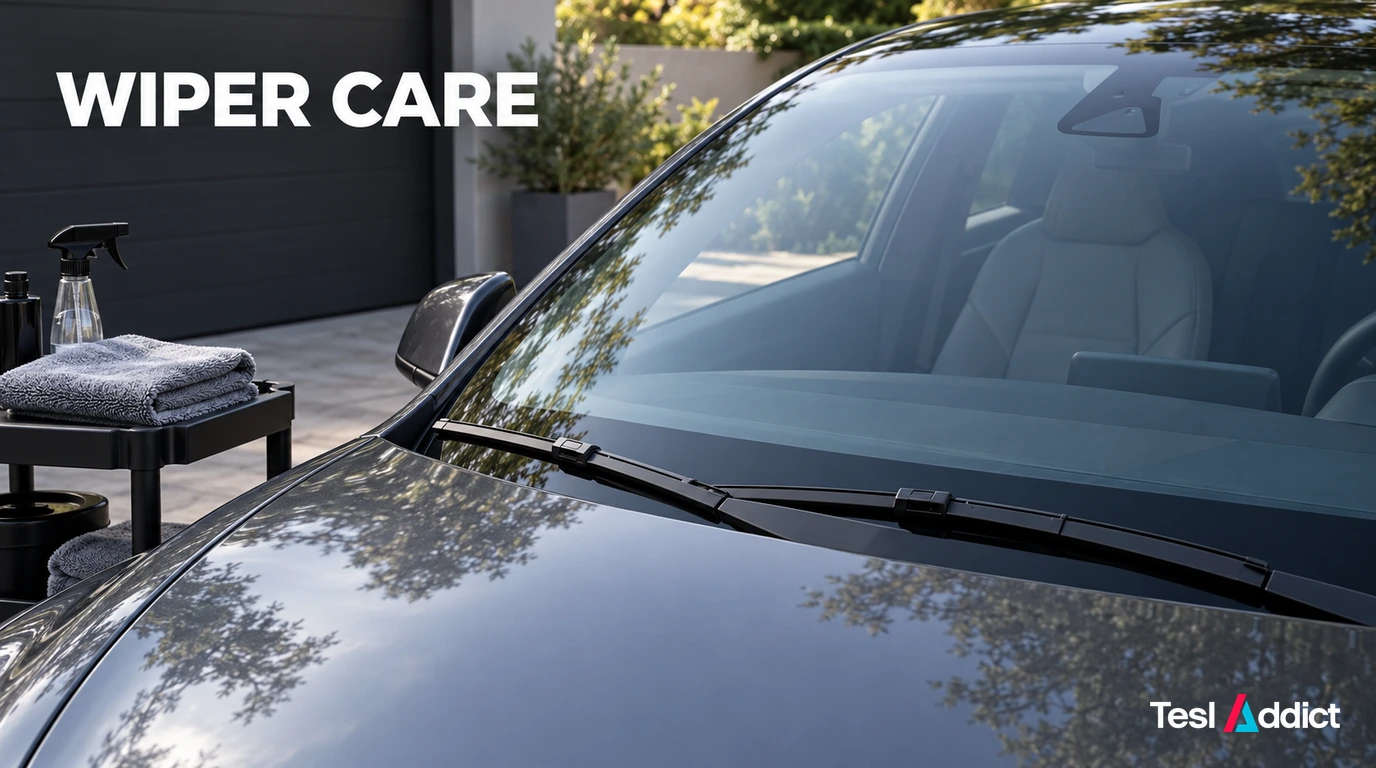
Use cold-weather washer fluid suited to local temperatures and replace damaged blades with the correct fitting. Clear snow and ice before driving. Where fitted, use the vehicle’s wiper defrosters; otherwise follow the manual’s service-position guidance.
Plan charging around cold weather
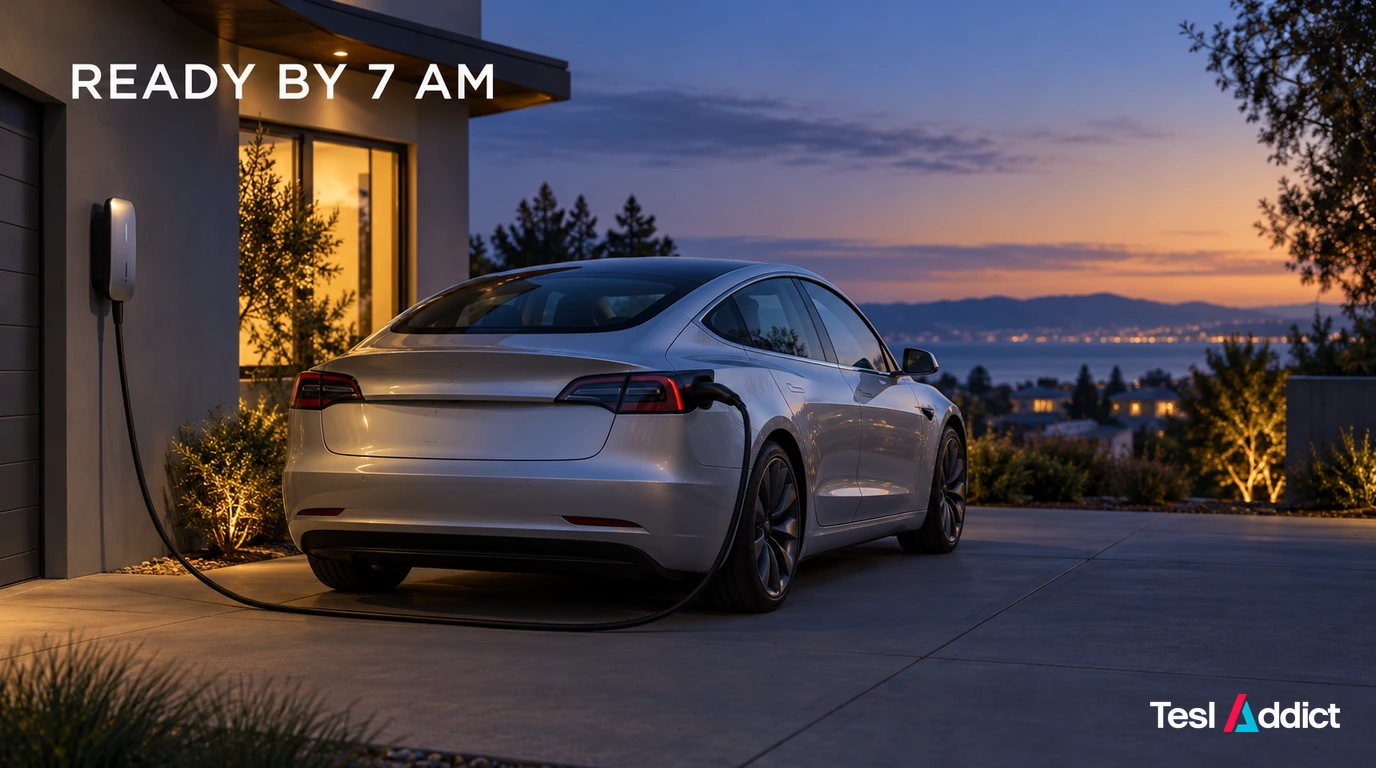
Precondition while plugged in when practical and set a charging schedule that suits your departure and electricity plan. A normal household outlet may provide too little power for useful charging in severe cold. Keep a sensible arrival reserve and identify a backup charging stop for longer drives.
Tesla’s winter guidance covers preconditioning, snow removal and cold-weather charging. Use your own consumption history rather than a universal winter range-loss percentage.
Carry a practical emergency kit
Pack warm clothing, a blanket, gloves, a flashlight and a charged phone power bank. Keep roadside-assistance details accessible. Only use charging cables and adapters approved for your vehicle and connection; an improvised extension lead or unfamiliar outlet is not a dependable emergency plan.
Review the journey and charging options before setting out. Our charging-cost calculator can help with the budget; actual weather, road conditions and available charging determine the trip plan.