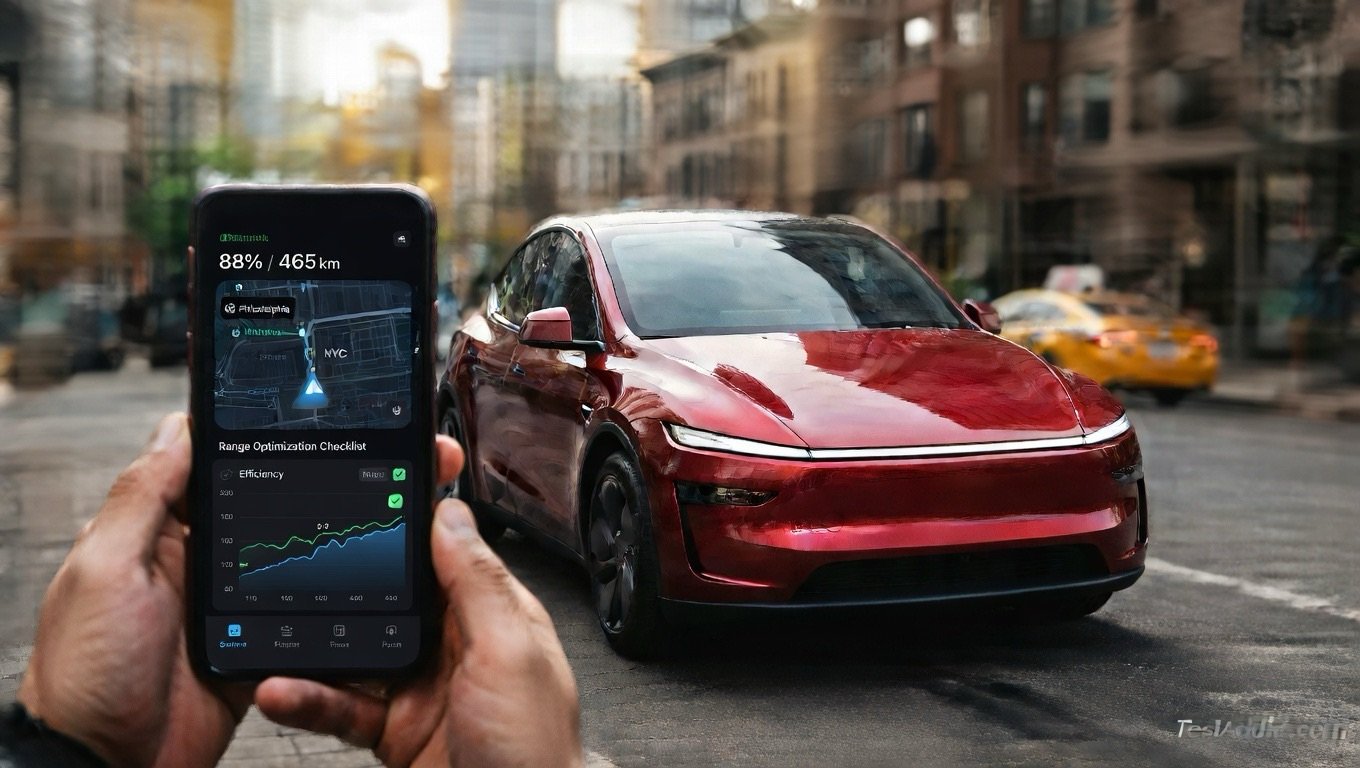
Hitting the highway and watching your estimated range plummet faster than the actual distance you are traveling is a rite of passage for new EV owners. Achieving the best possible efficiency requires managing both your driving style and the vehicle’s environment. Whether you are navigating a snowy commute down the 403 or prepping your 2025 Model Y for a summer road trip, these proven strategies will help you maximize your range and eliminate range anxiety.
Master Your Speed and Acceleration
Air resistance increases exponentially at high speeds. Cruising at 110 to 120 km/h is significantly more efficient than pushing past 130 km/h. If you find yourself naturally accelerating too quickly, engage Chill Mode (Controls > Dynamics > Acceleration). This software tweak smooths out your acceleration curve, preventing the energy-heavy rapid starts that drain your battery at green lights without you even realizing it.
Rethink Your Climate Control
Heating or cooling the entire cabin volume is incredibly energy-intensive. When the cold weather hits, rely heavily on your seat and steering wheel heaters instead of blasting the main cabin air. They consume a fraction of the power and keep your core just as warm. In the summer months, the massive glass roof acts like a greenhouse, forcing your A/C to work overtime.
• This Spigen Tesla Model Y Glass Roof Sunshade dramatically reduces the interior temperature and can lessen the load on your A/C.
Precondition Like a Pro
This is the single most important habit to build for daily driving. Always use the Tesla App to “Precondition” your car while it is still plugged into your home charger before you leave. This uses wall power—not your battery—to warm up the battery cells to their optimal operating temperature and heat or cool the cabin. By doing this, you leave the driveway with a perfectly primed battery ready to maximize regenerative braking immediately, rather than wasting your stored energy to heat a frozen battery pack.
Strict Tire Management
Keep your tires tightly inflated to the recommended 42-45 PSI (always check the sticker on your driver-side door pillar for your specific configuration). Under-inflated tires create more rolling resistance and can easily slash your total range by 5% or more. Remember that cold weather naturally compresses the air in your tires, causing the PSI to drop significantly overnight.
• Keep a reliable 12V portable air compressor in your sub-trunk so you can top off your PSI in your driveway instead of hunting for a working gas station air pump. Checkout this Fanttik X8 Apex Portable Tire Inflator on Amazon, which fits perfectly in the lower storage bins.