⚡ The Quick Take:
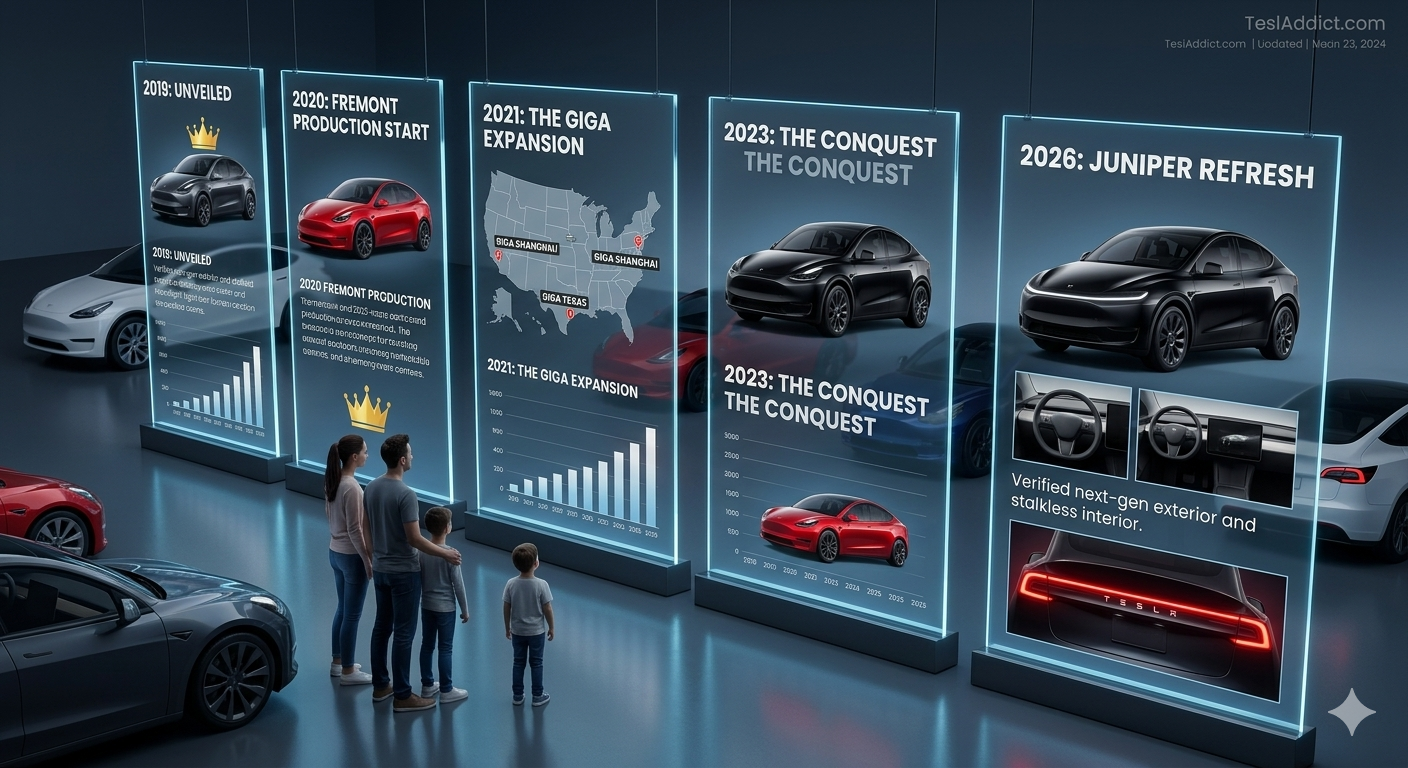
• The Blueprint: Unveiled in March 2019, the Model Y utilized roughly 75% of the Model 3’s architecture, allowing Tesla to scale manufacturing at an unprecedented rate.
• Global Domination: Fueled by localized production at Gigafactories in Shanghai, Berlin, and Texas, the compact SUV quickly became a staple on roads across North America, Europe, and Asia.
• Making History: In 2023, it shattered a century-old industry ceiling by becoming the first electric vehicle to be crowned the world’s best-selling car of any kind.
A Masterclass in Scaling Production:
When Elon Musk took the stage at Tesla’s design studio in Hawthorne, California, on March 14, 2019, the automotive world was watching closely. The mission was clear: to introduce a compact electric SUV that would serve as the next major catalyst in accelerating the world’s transition to sustainable energy.
At first glance, critics were quick to label the Model Y as simply a “larger Model 3.” And from an engineering standpoint, they weren’t entirely wrong. But what some saw as a lack of radical redesign was actually a masterstroke of manufacturing strategy.
By sharing approximately 75% of its parts with the already successful Model 3 sedan, Tesla avoided the devastating production bottlenecks that had plagued their earlier vehicle launches. This shared DNA allowed the company to manufacture the Model Y faster and far more efficiently.
Yet, for the consumer, the Model Y offered exactly what millions of drivers were clamoring for: the undeniable practicality of an SUV. It delivered significantly more cargo space, a commanding higher seating position, a massive rear hatch, and even an optional third-row configuration, all without sacrificing the exhilarating performance of an EV.
When production officially kicked off at the Fremont factory in early 2020, it marked the beginning of a rapid global expansion. To meet skyrocketing demand, Tesla aggressively ramped up localized manufacturing, spinning up lines at Giga Shanghai, Giga Berlin, and Giga Texas. Within a couple of years, the Model Y transformed from a California novelty into a common sight on highways across the globe.
Rewriting Automotive History:
Then, something truly historic happened.
By the end of 2023—just four years after its initial unveiling—the Tesla Model Y achieved something no electric vehicle had ever done before. Racking up roughly 1.22 million global deliveries, it officially surpassed the Toyota Corolla to become the world’s best-selling car of any kind. It dethroned traditional gasoline vehicles that had dominated the market for decades, signaling a definitive shift in consumer behavior and proving that EVs were no longer a niche segment, but the new standard.
The Legacy Continues:
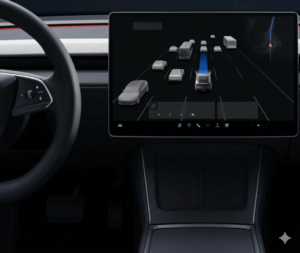
Today, as it crosses the 4-million mark in cumulative global sales and looks ahead to the highly anticipated 2026 “Juniper” refresh (featuring that striking continuous edge-to-edge front light bar and a modernized stalkless interior), the Model Y stands as a pillar of modern automotive history. Its meteoric rise wasn’t just about zero emissions; it was driven by a holistic ecosystem. From seamless over-the-air (OTA) software updates and industry-leading safety ratings to advanced driver-assistance features and native access to the sprawling Supercharger network, the Model Y redefined what buyers expect from a family vehicle.
From a concept revealed on a dimly lit stage in 2019 to the most successful car on Earth, the Model Y didn’t just participate in the automotive market—it completely rewired it.