Tesla battery technology matters most when it changes something you can use: driving range, charging time, durability or cost. A cell-size headline alone cannot tell you how a particular car will perform.
Cell format, chemistry and pack are different things
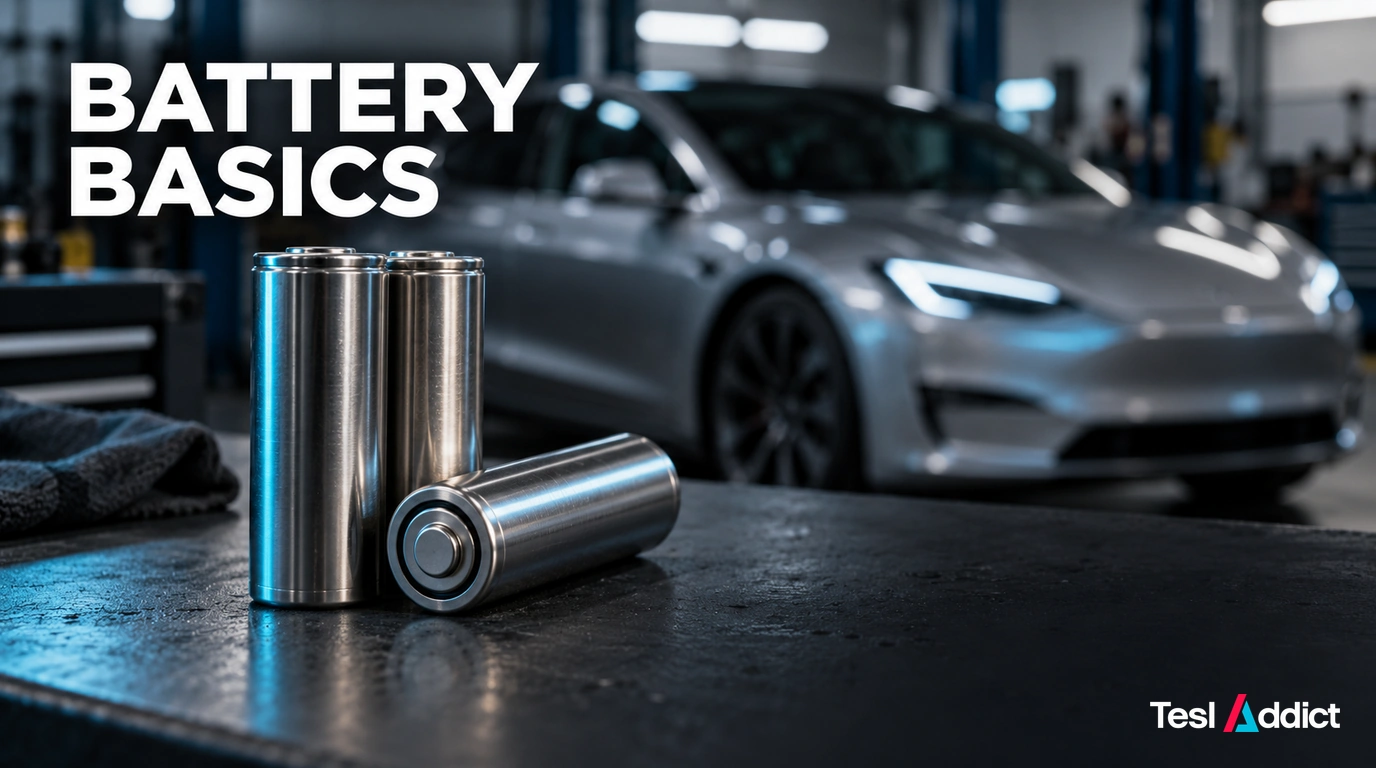
Numbers such as 2170 and 4680 describe cylindrical cell formats. They do not, by themselves, identify the vehicle’s usable battery capacity, charging curve or battery chemistry. A larger cell is not the same as a proportionally larger pack.
Likewise, a Model 3 or Model Y badge is not enough to identify every battery fitted across model years and markets. Use the information for the vehicle you are buying or already own, rather than a blanket rule for an entire model line.
Follow the charging recommendation in your car
The useful daily limit is the one recommended for your vehicle. Do not assume every rear-wheel-drive Tesla should regularly charge to 100%, or that a particular chemistry makes prolonged storage at full charge irrelevant.
Tesla’s high-voltage battery guidance explains care and the consequences of allowing the battery to become fully discharged. Consult the manual and charging screen for your model.
For a home setup, compare the Autel AC Lite 40A and AC Elite 50A against your daily distance and electrical supply. A higher charger rating does not change the car’s battery chemistry or onboard charging limit.
Separate temporary range changes from degradation
Cold weather, speed, terrain, tires and cabin conditioning can change energy use without representing permanent loss of battery capacity. An estimated range figure is not a laboratory battery-health measurement.
Thermal management helps the vehicle operate and charge, but it does not guarantee identical performance in every climate or eliminate ageing. For an unexpected change, use the vehicle’s energy information and approved service guidance before buying diagnostic accessories.
Our battery-health guide explains what owners can check. Battery warranty conditions are separate from an estimate of how long a pack might last.
Read fleet data in context
A fleet average is not a promise for an individual car. Any retention figure needs its model, battery group, distance and report year alongside it. Tesla publishes historical reports in its Impact archive; use the relevant report rather than applying one percentage to every Tesla.
Buy the vehicle that exists today
Research targets and future cell announcements are not delivered specifications. Compare the current vehicle’s usable range, charging access, warranty and full ownership cost. A future battery improvement does not establish that an existing car will receive the same hardware or a free retrofit.
Start with the range and charging needs of your normal week, then allow for your longer journeys. A suitable, affordable vehicle today can be a better fit than waiting for an unconfirmed technology promise.